
By TheHurrican Tech Desk | Updated September 13, 2026
Quick answer, because let’s be real, that’s the part you actually came here for: yes, it’s out. Has been since March 11. And six months in, the price has come down enough that it’s a genuinely different buying decision than it was at launch. If you want the full picture — specs, what’s actually changed, whether it’s worth it right now — keep going, it’s all here. Grab a coffee, this one’s a bit long.
Samsung S26 Ultra: Key Facts at a Glance
| Spec | Details |
|---|---|
| Announced | February 25, 2026 (Galaxy Unpacked, San Francisco) |
| Released | March 11, 2026 |
| Launch Price | $1,299.99 (256GB) |
| Current Street Price | ~$961 (256GB, as of September 2026) |
| Display | 6.9″ Dynamic LTPO AMOLED 2X, 1440×3120, 120Hz, up to 2,600 nits |
| Chipset | Snapdragon 8 Elite Gen 5 for Galaxy (3nm) |
| RAM | 12GB or 16GB |
| Storage | 256GB / 512GB / 1TB |
| Rear Cameras | 200MP main (f/1.4), 50MP ultrawide, 50MP 5x telephoto (f/2.9), 10MP 3x telephoto |
| Battery | 5,000mAh, 60W wired charging |
| OS | Android 16, One UI 8.5 |
Okay, But Is This Thing Even New Anymore?
Honestly? Depends on what you mean by “new.” If you’re picturing rumors and leaks and some guy on Twitter guessing at specs — nah, that ship’s sailed. Samsung did the whole thing already. Unpacked event, February 25, San Francisco, full keynote, the lot. Pre-orders the very next day. And it’s been sitting on shelves — actual shelves, in actual stores, not “coming soon” shelves — since March 11.
So if your question is literally “when does it come out,” well. It already did. Six-ish months ago now, which, depending how you feel about time, either sounds like forever or absolutely nothing. What’s probably more useful to you at this point isn’t the release date — it’s whether the thing’s actually good, whether it’s aged well, and whether that price drop makes now a smarter time to buy than March was.
What Actually Changed From the S25 Ultra
Gonna be straight with you here: this isn’t Samsung’s biggest swing year over year. Not even close, honestly. It’s more of a — what’s the word — measured refresh? Meaningful in a couple spots, pretty much untouched everywhere else.
The chip’s the real upgrade, if you’re looking for one thing to point at. Snapdragon 8 Elite Gen 5 for Galaxy, a version Qualcomm built specifically for this phone, on a 3nm process, paired with an Adreno GPU. Samsung’s claiming a 19% CPU bump over the S25 Ultra — and here’s the interesting bit, that’s almost triple the CPU gain the regular S26 and S26+ got this year. Which tells you something, right? Samsung clearly decided the Ultra tier is where the “real” performance upgrade lives this generation, and the cheaper models got left mostly where they were.
NPU — the part of the chip handling on-device AI — jumped 39%. Sounds like a spec-sheet throwaway line, I know, but it’s not, not really. So much of what Samsung’s actually selling this year lives inside Galaxy AI, and all of that runs through the NPU. Weak NPU, laggy AI features, drained battery. Strong NPU — which is apparently what they’ve got now — and it just… works, without you noticing the phone’s doing extra math in the background.
Cameras kept the same headline number — still 200 megapixels on the main sensor, nothing changed there — but the aperture opened up, f/1.7 to f/1.4. In plain terms: about 47% more light hitting the sensor. That’s the kind of change you actually feel, not just read about, once it gets dark out. Telephoto got a similar bump too, f/3.4 down to f/2.9, roughly 37% more light at zoom range.
Privacy Display: This One’s Genuinely New, Not Just a New Name for Old Tech
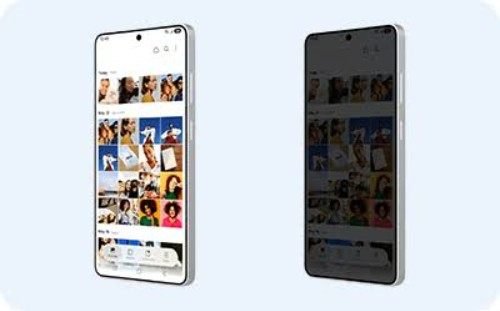
Worth pulling this one out on its own, because — unlike, say, half the “new” features phone makers announce every year — this is an actual first. The S26 Ultra has what Samsung’s calling the world’s first Privacy Display on a mobile phone. What it does, basically: narrows the viewing angle whenever you switch it on, so the person next to you on the subway, or across the coffee shop table, can’t just glance over and read whatever’s on your screen. It’s Ultra-exclusive this round — the regular S26 and the S26+ don’t get it, for whatever reason Samsung decided that.
Pair that with a redesigned ambient island camera cutout up top, plus better mDNIe processing under the hood (that’s Samsung’s display-tuning tech, in case that acronym means nothing to you, it didn’t to me either until I looked it up), and the screen’s doing more this year than just bumping a resolution number nobody was really asking for anyway.
S Pen — Still Here, Still the Reason a Lot of People Buy This Specific Phone
If the S Pen’s your whole reason for caring about Ultra phones in the first place — and for a lot of people, it genuinely is — nothing’s changed. It’s still tucked inside the phone, still the one functional thing that separates this from every other flagship on the market right now, Samsung’s own S26 and S26+ included. Nobody else ships a built-in stylus like this. Not Apple, not Google, nobody. If that’s why you buy Ultra phones, the S26 Ultra hasn’t taken that away from you.
Camera System, the Longer Version
Rear setup’s a quad-camera system, and — heads up — depending which spec sheet you’re reading, the exact sensor breakdown shifts slightly. Some list it as a 50MP ultrawide plus telephoto, others frame it as two separate 50MP units doing different jobs. What every source agrees on: 200MP main sensor leading the pack, a dual-telephoto setup covering both 3x and 5x optical range, and Samsung leaning hard into that dual-zoom setup as the system’s real selling point — clean, basically-lossless-feeling zoom across a wider range than any single telephoto lens could manage on its own.
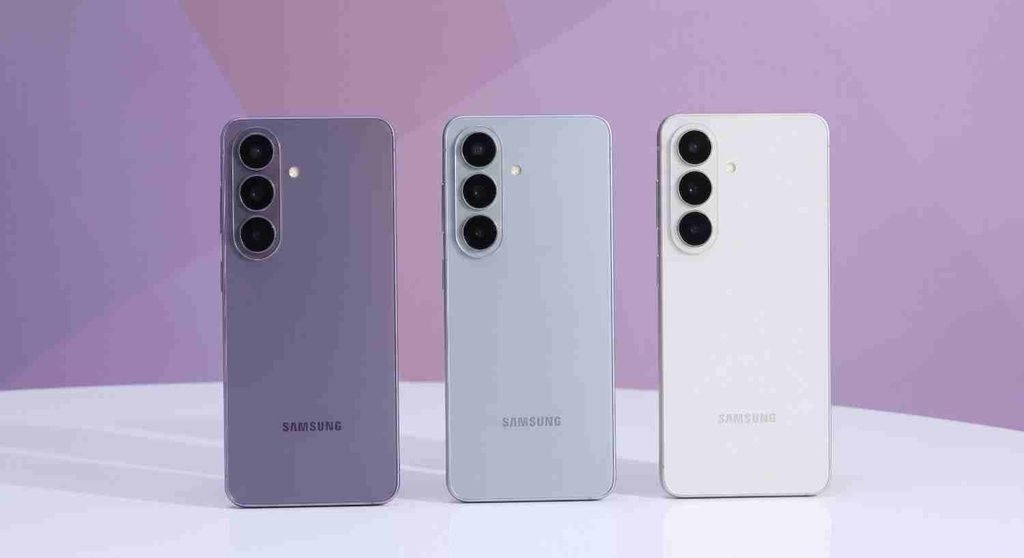
Front camera’s unchanged, still 12MP at f/2.2. Same as it’s been for a couple generations now, nothing to report there.
Performance, Day to Day
Benchmarks back up what Samsung’s claiming, for what that’s worth (and, fair, benchmark numbers aren’t everything, but they’re something). Geekbench 6 multi-core lands north of 11,000. AnTuTu clears close to 3.9 million. Numbers that put it comfortably at the top of Android performance charts this year. And with a redesigned vapor chamber Samsung says improves thermal performance by 21%, it’s not just fast in a lab test — it stays cool enough under real, sustained use that it doesn’t throttle down after ten minutes of gaming the way some flagships quietly do.
Battery’s still 5,000mAh, same as last year, so temper your expectations there — this isn’t a screen-on-time revolution, don’t let anyone tell you otherwise. 60W wired charging, 15W wireless, reverse wireless charging too, though small annoyance, and it’s a real one: no charger in the box. Bring your own, or budget for it separately, because a $1,000+ phone not including a $20 brick is still a little annoying no matter how normal it’s become across the industry.
Pricing: What It Cost Then vs. Now
Launch pricing matched the S25 Ultra dollar for dollar — $1,299.99 for the base 256GB version, $1,499.99 for 512GB, $1,799.99 if you wanted the full 1TB. Four colors at launch: Black, Cobalt Violet, Sky Blue, White.
Six months later, that number’s moved. The 256GB model’s showing up around $961 on Amazon right now — a real drop, not a marketing-fluff “sale” that’s 2% off. Worth knowing if you’ve been sitting on the fence. Samsung’s own trade-in program can knock off up to another $900 depending what you’re trading in and who your carrier is.
Design and Build
It’s a big phone. No getting around that — 163.6 x 78.1 x 7.9mm, 214 grams. If you’ve got smaller hands, or you’re jumping over from something like a standard-size iPhone, give yourself a week or two to adjust, because yeah, it is noticeably more phone in the hand than most people are used to. Gorilla Armor 2 up front, carried over from last year rather than upgraded — not every part of the phone got the refresh treatment — and build quality overall feels exactly like you’d want from something starting north of a grand.
Wi-Fi 7’s on board, Bluetooth 5.4 too — about as current as connectivity gets right now. Dual Nano SIM plus multi-eSIM support, handy if you travel a lot or juggle a work line and personal line on one device.
Galaxy AI: Where Most of the “Upgrade” Story Actually Lives
Here’s the thing about this generation, and Samsung’s not really hiding it — the AI story is doing more of the marketing heavy lifting than the raw hardware specs are. Galaxy AI’s baked into One UI 8.5 deeper than previous years, touching real-time photo processing, on-device writing help, and that 4x jump in image processing precision the new mDNIe tech’s supposedly delivering.
One thing worth flagging, though: not every Galaxy AI feature is free forever. Samsung’s basic tools, sure, those are free. But the more advanced stuff — and pretty much anything routed through a third-party AI model — can come with its own terms, sometimes fees, down the road. Not a dealbreaker by any means, just don’t assume every AI feature shown off at Unpacked stays free indefinitely, because that’s not really how it’s shaping up.
So, Should You Actually Buy It Right Now?
Comes down mostly to what you’re upgrading from.
- Coming from an S24 Ultra or older? Jump’s meaningful — chip, camera, display, all of it moved forward enough to matter. Worth it.
- Coming from an S25 Ultra? Tougher sell, especially at full price. Real gains, sure, but incremental ones — unless the Privacy Display or the wider camera apertures specifically speak to you, you might genuinely not notice much difference day to day.
- Torn between this and an iPhone? If it’s the S26 Ultra versus the iPhone 17 Pro Max or the newer 18 Pro — check the iPhone 18 Pro release schedule if you’re not sure which one’s actually shipping when — it mostly comes down to which ecosystem you’re already in at this point. Both are excellent phones, full stop. The S26 Ultra’s real edge is the S Pen and that dual-telephoto zoom range, and Apple’s still got nothing that matches either one.
At today’s price — comfortably under $1,000 — it’s a stronger buy than it was back in March. Same phone. Meaningfully less money to get it.
Frequently Asked Questions
Is the Samsung Galaxy S26 Ultra out yet?
Yes. Announced February 25, 2026, released March 11, 2026. It’s been on the market for roughly six months as of this update.
How much does the Samsung S26 Ultra cost?
Launch pricing started at $1,299.99 for 256GB. As of September 2026, street pricing has dropped to around $961 for the same configuration.
What chip does the Galaxy S26 Ultra use?
A custom Snapdragon 8 Elite Gen 5 for Galaxy, built on a 3nm process, paired with an Adreno GPU.
Does the Samsung S26 Ultra still have the S Pen?
Yes. The built-in S Pen remains exclusive to the Ultra tier, unchanged in any way that affects how it works.
Is the Samsung S26 Ultra worth buying over the S25 Ultra?
If you’re already on an S25 Ultra, the upgrade is incremental, not essential. Coming from an S24 Ultra or older, the difference in chip, camera, and display is big enough to justify switching.
This article reflects confirmed Samsung specifications and pricing as of September 13, 2026.