

By TheHurrican Tech Desk | Updated September 15, 2026
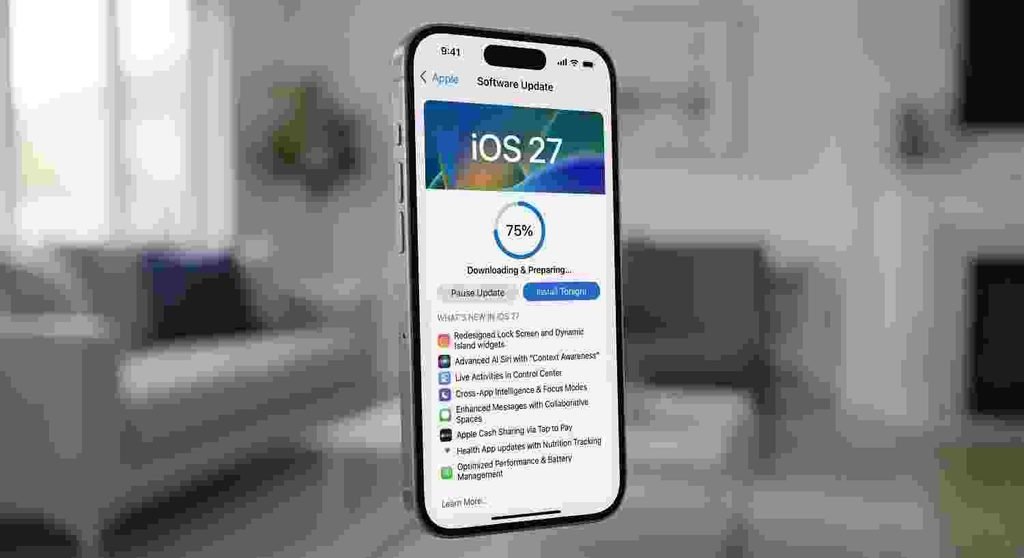
Quick answer, because that’s usually the part people actually want: iOS 27 is officially here. Apple began rolling it out yesterday, Monday, September 14, at 10 a.m. Pacific, as a free update for every supported iPhone. If you haven’t grabbed it yet, it’s sitting in Settings right now, waiting on you — and honestly, this is probably the biggest Siri update Apple’s shipped in a decade. Here’s what’s actually changed.
iOS 27: Key Facts at a Glance
| Detail | Info |
|---|---|
| Release Date | September 14, 2026, 10 a.m. PT (now live) |
| Announced | September 9, 2026 (“Surprise and Shine” event) |
| Cost | Free |
| Headline Feature | Siri AI, powered by Apple Foundation Models + Google Gemini |
| Compatible Devices | iPhone 11 and newer, iPhone SE (2nd gen) and newer |
| Siri AI Availability | Global, except EU Apple Accounts at launch |
| Also Releasing Same Day | iPadOS 27, macOS 27, watchOS 27, tvOS 27, visionOS 27 |
Alright, So What’s the Big Deal With This One?
Here’s the thing — most iOS updates, if we’re being honest, are kind of a shrug. New wallpapers, a few redesigned icons, some bug fixes nobody asked about specifically. iOS 27 isn’t really that. This is the update where Siri finally stops being, well, kind of embarrassing, and starts actually behaving like the assistants everyone’s gotten used to on other platforms.
Apple confirmed the release date the same day it confirmed pretty much everything else — September 9, at the “Surprise and Shine” keynote, the same event where the iPhone 18 Pro release schedule and the brand-new iPhone Duo both got announced. iOS 27’s been cooking since WWDC back in June, through eight separate developer and public beta builds, hitting Release Candidate status the week before launch. And now it’s done — yesterday, 10 a.m. Pacific, right on schedule. No delay, no last-minute pushback, which honestly isn’t always a given with updates this ambitious.
Siri AI: The Actual Headline
Let’s just get into it, because everything else in this update is kind of secondary. Siri’s been completely rebuilt — Apple’s calling it Siri AI internally in a lot of the marketing — and it’s running on a blend of Apple’s own Foundation Models and, this is the part that raised eyebrows, Google’s Gemini AI underneath. Not something Apple’s exactly hidden, either; it’s right there in the announcement.
Practically, what that means: Siri can now handle actual back-and-forth conversation. Follow-up questions. Context that carries across a whole exchange instead of resetting every time you say “hey Siri” again. It runs as its own standalone app now too, with something close to a chat history you can scroll back through — a real departure from the old one-shot command model Siri’s used since, what, 2011?
There’s also onscreen awareness now, which is honestly the feature that sounds small on paper but ends up mattering a lot in daily use. Siri can look at what’s actually on your screen and act on it — save an address someone just texted you, straight to Calendar, without you manually copying anything. Pull personal context from Mail, Messages, Photos, Notes, so if you ask it to dig up “that email from the accountant last month,” it can actually go find it, instead of shrugging and opening a web search.
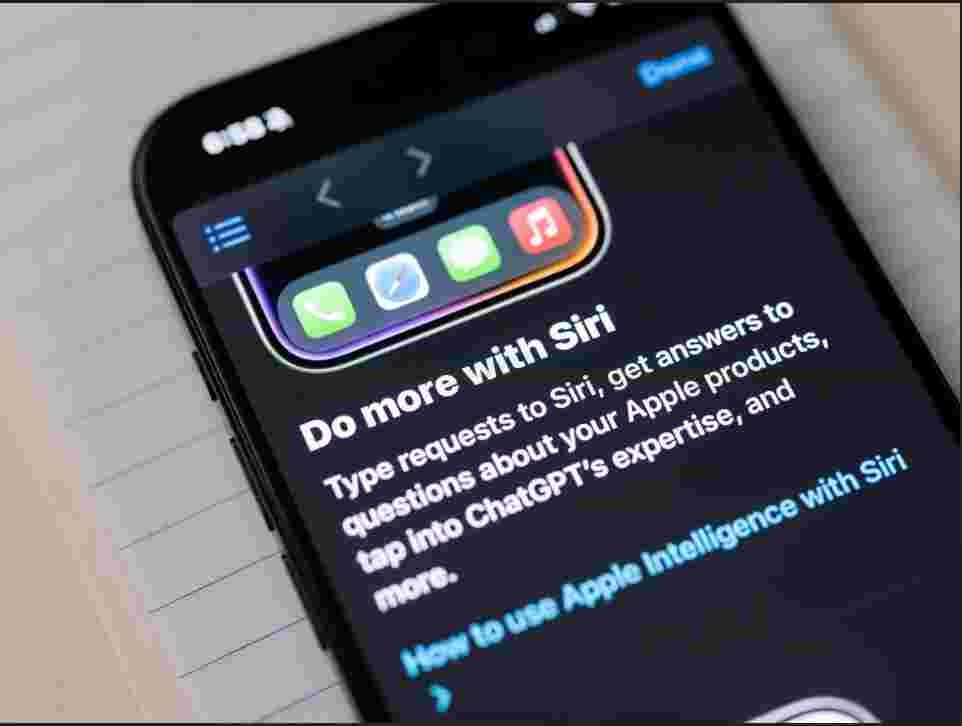
One catch worth flagging clearly: Siri AI isn’t rolling out everywhere at once, even now that the update’s live. It’s available pretty much globally — except for EU Apple Accounts, which are sitting this one out for now, presumably tied up in the usual regulatory back-and-forth Apple’s had with European regulators over AI features generally.
Wait, Google’s Powering Siri Now?
Yeah, and it’s a genuinely bigger deal than the one-line summary makes it sound. Apple’s new Foundation Models were developed using the technology behind Google’s Gemini, and the two systems work together through what Apple’s calling a system orchestrator — basically a traffic controller that decides whether a request should pull from Apple’s on-device model, route out to the Gemini-backed cloud layer, or tap into the Spotlight index to grab data sitting in your other apps.
Newer phones get a bit more out of this than older ones, for what it’s worth. Apple’s more powerful on-device model — running specifically on iPhone 17 Pro and iPhone Air hardware — can do things like customizable Siri voices, adjusting pace and expressiveness, because that model can generate speech directly rather than just processing text. Older supported iPhones still get Siri AI, just not every single bell and whistle.
And on the privacy question everyone immediately asks — no, Google doesn’t get your name, your contacts, your actual queries in identifiable form. Apple’s routing everything through its Private Cloud Compute setup first, stripping identifying details before anything touches Google’s servers, then sending the response back through Apple’s own infrastructure. Whether you fully trust that architecture is obviously a personal call, but that’s the stated setup, for what it’s worth.
Liquid Glass Gets a Second Pass
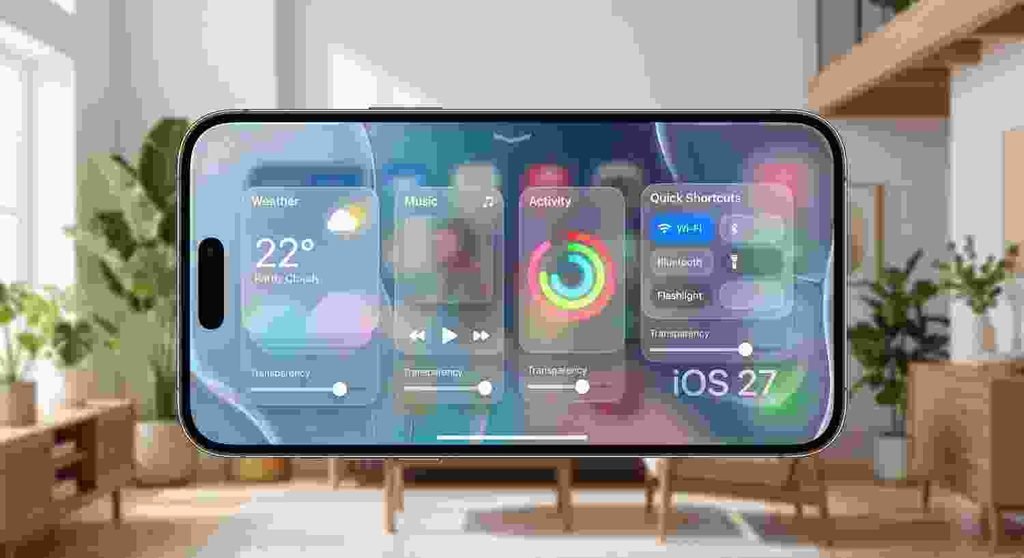
Beyond Siri, Apple’s carrying forward and refining the Liquid Glass visual language it introduced last cycle — more polish this time, with a slider that lets you actually control how transparent different interface elements look, plus a fresh batch of redesigned app icons and updated widgets across the Home Screen. Not the headline feature by any stretch, but it’s the kind of thing you’ll notice within about five minutes of installing the update, purely because it’s everywhere, touching basically every screen you look at.
Everyday App Changes Worth Knowing About
A handful of the built-in apps got real, functional updates — not just visual ones:
- Phone app — redesigned to pull in relevant info straight from Mail, so incoming calls can show more context automatically, without you digging through a separate app first
- Messages and Mail — both picking up smarter suggestions, the kind of lightweight automation Apple’s been slowly building since Apple Intelligence first showed up in iOS 18
- Photos — gets Spatial Reframing for adjusting composition after the fact, an Extend tool that uses generative fill to widen a photo’s borders, and an upgraded Clean Up tool for erasing background distractions
- Safari — AI-assisted page summaries, plus general speed improvements under the hood
- iPhone Handoff — a genuinely new one, letting a single phone number work across multiple iPhones, which sounds niche until you realize how many households juggle a work phone and a personal one
Parental Controls Got a Real Upgrade Too
Worth a specific mention here, because this one’s easy to overlook if Siri’s eating all the headlines. iOS 27 adds Time Allowances and Schedules for more granular control over how kids use their devices, plus a new Ask to Browse feature that flags unfamiliar websites and requires parental approval before a kid can actually visit them. Small addition in the grand scheme of the update, but a meaningful one if that’s a feature you’ve been waiting on.
Which iPhones Actually Get It?
Pretty broad compatibility, honestly, broader than some expected given how AI-heavy this update is. iOS 27 supports every iPhone back to the iPhone 11 and the second-generation iPhone SE. That said — and this is the part worth reading carefully — not every Siri AI feature works identically across that whole range. Some of the more demanding on-device capabilities, the custom voice stuff especially, are tied to newer chips specifically, the kind found in the iPhone 17 Pro, iPhone Air, and now the freshly announced iPhone 18 Pro lineup and the iPhone Duo. Older supported phones get Siri AI, just a slightly less capable version of it.
How Does This Compare to What Android’s Doing?
Fair question, and one worth a quick honest answer. Google’s own Android 17 landed in roughly the same fall window, and the two companies are taking noticeably different approaches here. Apple’s leaning hard into AI as the single biggest reason to upgrade this cycle, threading Siri into nearly every system function and tying its best version to specific hardware. Google’s approach with Android 17 is quieter by comparison — more focused on stability and privacy defaults, with Gemini integration handled more incrementally rather than one big dramatic assistant relaunch.
Worth noting too, if you’re weighing an ecosystem switch generally: this same AI-forward push is showing up on the hardware side across both camps — Samsung’s leaning into Galaxy AI pretty heavily on the current S26 Ultra lineup as well, so it’s not really an Apple-only story this year. Everyone’s racing toward the same “your phone finally understands you” pitch, just taking different roads to get there.
Should You Update Right Now?
For most people, yeah, probably. It’s free, compatibility’s broad, and it’s been out a full day now with no major red flags reported yet. Unless you’re someone who deliberately waits a week or two for the first bug reports to settle — which, fair, that’s a reasonable instinct with any major iOS release — there’s not much reason to keep putting it off. If you’re specifically excited about Siri AI, though, worth remembering it’s rolling out gradually and region-by-region in some cases, so don’t panic if it hasn’t fully shown up yet after you install.
Frequently Asked Questions
Is iOS 27 out yet?
Yes. Apple released it Monday, September 14, 2026, at 10 a.m. Pacific Time, as a free update for all supported iPhones. It’s available now.
Which iPhones support iOS 27?
Every iPhone from the iPhone 11 onward, including the second-generation iPhone SE. Some Siri AI features require newer hardware to run at full capability.
Is Siri AI actually powered by Google?
Partly. Apple’s new Foundation Models were built using technology derived from Google’s Gemini AI
working alongside Apple’s own on-device models through a system Apple calls an orchestrator.
Is Siri AI available in Europe?
Not at launch. Siri AI is rolling out globally except for EU Apple Accounts, reportedly due to regulatory considerations.
Does iOS 27 launch alongside anything else?
Yes. Apple’s releasing iPadOS 27, macOS 27, watchOS 27, tvOS 27, and visionOS 27 on the same day.
This article reflects Apple’s confirmed release details as of September 15, 2026.