
By TheHurrican Tech Desk | Updated September 13, 2026
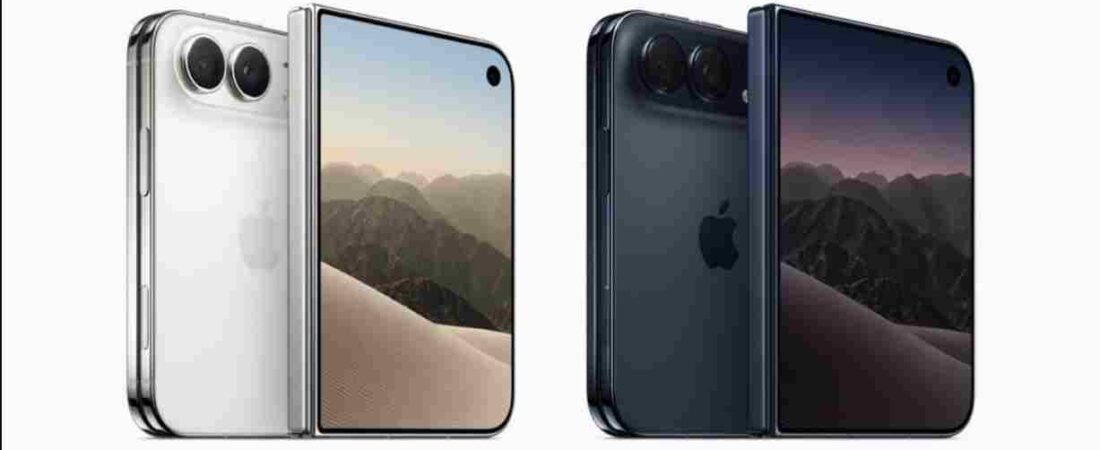
Quick answer first, since that’s what you’re probably here for: Apple’s foldable is real, it’s called the iPhone Duo, it was officially announced September 9, and no — you can’t buy it yet. Pre-orders don’t open until October 16, with the thing actually landing in stores a week after that, October 23. Starting price, brace yourself, $1,999. Here’s everything else worth knowing before then.
iPhone Duo: Key Facts at a Glance
| Detail | Info |
|---|---|
| Announced | September 9, 2026 |
| Pre-Orders Open | October 16, 2026 |
| Release Date | October 23, 2026 |
| Starting Price | $1,999 (256GB) |
| Storage Options | 256GB, 512GB, 1TB, 2TB |
| Chip | Apple A20 Pro |
| Inner Display | 7.6″, nano-texture finish |
| Outer Display | 5.4″ |
| Battery | Dual-cell, up to 24 hrs combined-screen use |
| Biometrics | Touch ID (no Face ID) |
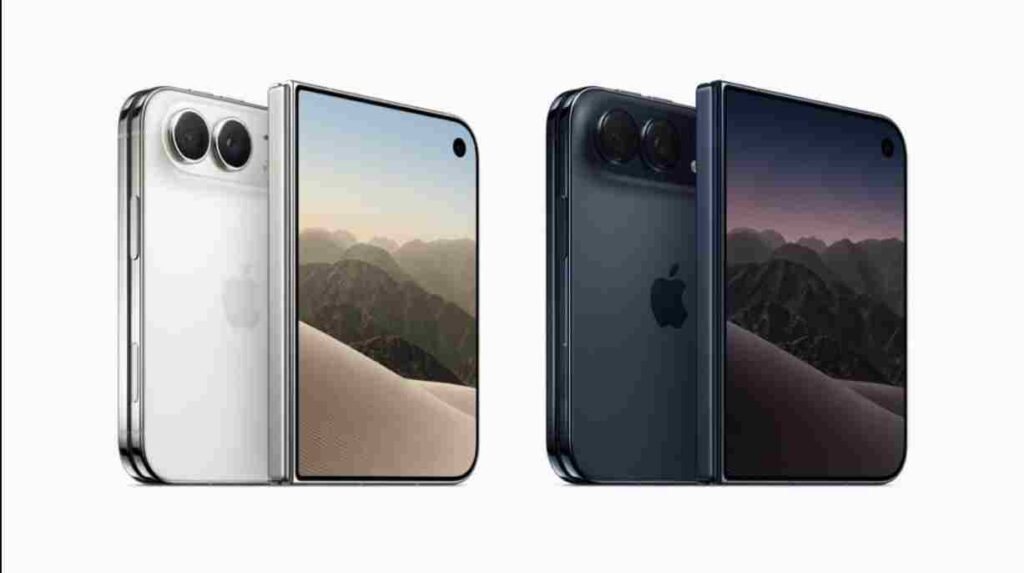
| Colors | Star White, Night Sky |
| Weight | 254g |
So, What Actually Is This Thing?
Right, let’s back up, because “iPhone Duo” doesn’t exactly explain itself. It’s Apple’s first folding phone — book-style, opens up like a little notebook, which puts it in the same general category as Samsung’s Galaxy Z Fold line, a category Samsung’s had pretty much to itself for years now. Apple’s version came out of the September 9 “Surprise and Shine” event, the same keynote where the iPhone 18 Pro and Pro Max got their moment (if you haven’t already, worth checking the full iPhone 18 Pro release schedule since those two are on a completely different timeline than the Duo).
Closed, it’s a normal-ish phone — 5.4-inch outer screen, which Apple says covers about 90% of the screen area you’d get on a standard iPhone 18 Pro. Open it up, and you’ve got a 7.6-inch inner display, which Apple’s calling the largest screen it’s ever put in an iPhone — supposedly 50% more screen real estate than even the Pro Max offers. Both screens share the same aspect ratio too, so nothing looks stretched or squeezed depending which one you’re using at the time. Small detail, but it’s the kind of thing that actually matters day to day.
Wait, I Thought It Was Called the iPhone Fold?
Yeah, so did basically everyone, myself included, for the better part of two years. “iPhone Fold” and “iPhone Ultra” both floated around in leaks and reports for ages before the actual event. Turns out Apple went with Duo instead — and according to reporting that came out right after the announcement, the naming wasn’t arbitrary. The theory going around is that “Duo” leaves the “Fold” and “Ultra” names open for Apple to use later, possibly on future foldable variants, rather than boxing itself into a name it might want to reuse down the line. Whether that’s exactly right or just industry speculation filling a gap, hard to say for certain. But it tracks with how Apple’s handled naming before.
The Hinge (Because Everyone Asks About the Hinge)
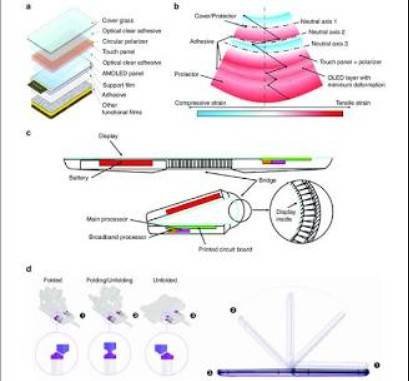
If you’ve used, or even just researched, a foldable phone before, you know the hinge is where the whole experience either holds together or falls apart — sometimes literally. Apple’s going with what it’s calling a precision hinge, built from more than 100 individual components, designed to hold the display flat when open and snap shut securely thanks to an integrated magnet array.
The whole thing’s wrapped in grade 5 titanium, with a mirror-polished finish on the body and a 3D-printed hinge cover that’s got a contrasting micro-blasted texture — small design flourish, but it’s the kind of detail Apple tends to obsess over.
Whether it holds up long-term, no crease forming, no hinge fatigue after a year of daily folding — that’s genuinely something nobody can answer yet, reviews included, because the thing hasn’t been in real people’s pockets for real months at a time. Worth remembering that before you fully trust anyone’s early verdict, mine included.
Chip, Battery, and the Stuff That Actually Affects Daily Use
Under the hood, it’s running the same A20 Pro chip found in the Pro line, paired with vapor-chamber cooling — Apple’s claiming up to 35% better sustained performance compared to previous chips, which matters more on a foldable than you’d think, since cramming all that processing power into a thinner, dual-screen chassis creates its own heat management headache.
Battery’s the more interesting story, honestly. Each half of the phone has its own separate battery, working together as one system. Apple’s rating it for up to 31 hours of video playback if you’re mainly using the inner display, 44 hours if you’re sticking to the outer screen, and a blended 24 hours if you’re using both roughly equally — which, realistically, is what most people will end up doing.
Fast charging gets you to 50% in about 20 minutes with a 35W-or-higher adapter, and even a five-minute top-up is supposedly good for up to five hours of outer-display video playback, which is a genuinely useful stat if you’ve ever needed 10% more battery on your way out the door.
MagSafe’s supported too, wireless charging up to 25W, same for Qi2
— so no, going foldable doesn’t mean giving up the charging ecosystem you’re already used to.
Camera and Biometrics: The Trade-Offs Worth Knowing About
Here’s where the Duo asks you to give something up in exchange for the folding screen. No Face ID — it’s Touch ID instead, tucked into the side button, which is a real shift if you’ve been on Face ID since the iPhone X.
And the camera system skips the telephoto lens entirely, something Pro buyers specifically would notice, especially anyone weighing this against the actual Samsung Galaxy S26 Ultra’s camera setup, which keeps a proper dual-telephoto zoom range that the Duo just doesn’t try to match.
Seems like a deliberate call on Apple’s part — prioritize thinness and the folding mechanism over matching the Pro line spec for spec on cameras. Makes sense, engineering-wise. Whether it’s a dealbreaker depends entirely on how much you actually use zoom day to day, versus how much you just want the folding screen itself.
Durability and What Apple’s Doing Differently This Time
Ceramic Shield protection carries over, and the hinge —
per Apple, anyway — went through extensive reliability testing given how many moving parts are packed into it.
Worth flagging that Apple’s also leaning into sustainability messaging with this launch more than usual: 35% recycled materials overall, 100% recycled cobalt in the batteries, recycled titanium in the chassis, and the manufacturing process reportedly running on 60% renewable energy.
Packaging’s fully recyclable too, no plastic. Not the reason most people will buy a $1,999 phone, sure, but worth mentioning since Apple clearly wants it mentioned.
Apple Pencil Support Is Coming — Just Not Yet
One detail that’s easy to miss: the iPhone Duo will be the first iPhone ever to support Apple Pencil, specifically the USB-C version. Except — and this is the part that trips people up — that support isn’t actually live at launch.
It’s coming “later in 2026,” per Apple’s own wording, which is vague enough that nobody outside Cupertino really knows the exact date yet. If stylus support is a big part of why you’re considering this phone, worth holding off on judgment until that update actually drops.
Price: How It Stacks Up
$1,999 for the 256GB model, climbing up through 512GB and 1TB, all the way to a 2TB option at the top.
For comparison, that’s roughly $700 more than the iPhone 18 Pro Max’s $1,299 starting price — a real premium, and one that’s buying you the folding display, the precision hinge, the titanium build, and the second screen, rather than better cameras or a beefier chip than the regular Pro line already offers.
Apple’s also offering it through its Apple Upgrade leasing program via Klarna, with monthly payments starting around $57.99 for 24 months on the base model — worth knowing if $1,999 up front feels steep but the phone itself still appeals.
iPhone Duo vs. Galaxy Z Fold: How Apple’s Late Entry Stacks Up
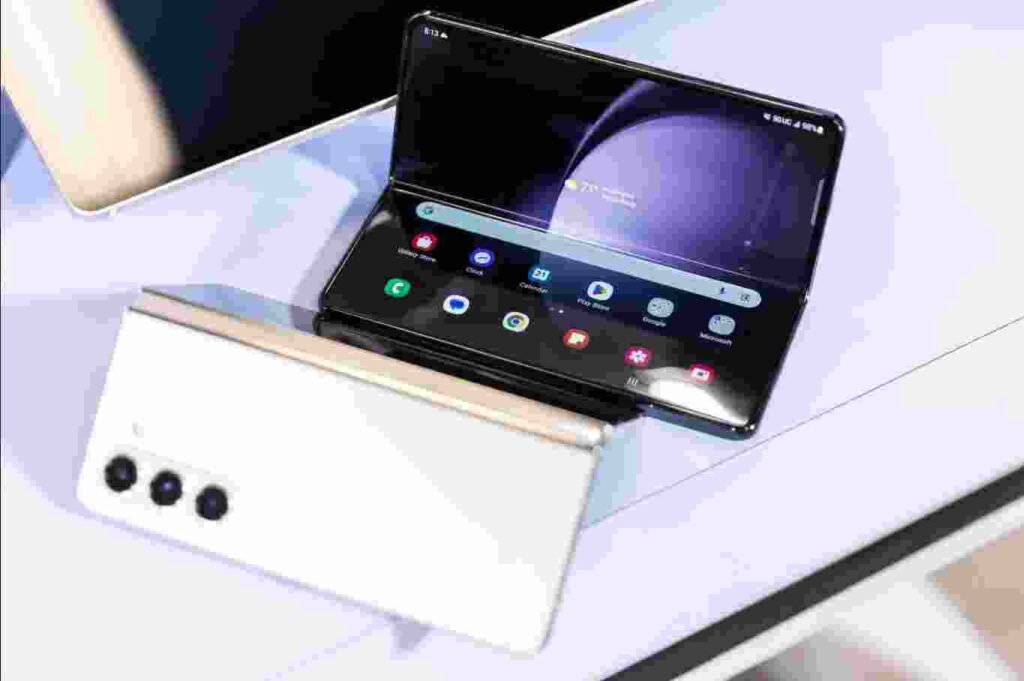
Can’t really talk about the Duo without acknowledging Apple’s showing up to a category it’s been avoiding for the better part of a decade. Samsung’s Galaxy Z Fold line has had years to iterate — hinge design, crease reduction, software adapted for the fold — while Apple sat back and, presumably, watched.
That’s not necessarily a bad strategy; Apple’s done it before with smartwatches, with wireless earbuds, showing up late but landing somewhere polished.
Where the two genuinely differ: Samsung’s current Fold models generally hold onto a telephoto lens, an area where the Duo makes a real compromise, and Samsung’s had multiple hardware generations to work the crease and hinge feel down to something most reviewers no longer complain about.
Apple’s counter is the software side — iOS 27’s been built specifically to handle the transition between the two screens, with Split View multitasking, StandBy without need to be plugged in, and hands-free FaceTime that actually makes sense of the dual-screen layout instead of just stretching one app across a bigger canvas.
Whether that software polish outweighs Samsung’s hardware head start is going to depend entirely on which ecosystem you’re already invested in — and how much you value refinement over raw specs on paper.
Should You Wait for It, or Just Get a Pro?
Honestly? Depends what you’re actually after.
- Want the biggest screen Apple’s ever put in a phone, and you don’t mind paying a real premium for it? The Duo’s worth the wait — pre-order October 16, in hand by the 23rd.
- Mainly care about camera quality, especially zoom? Stick with the iPhone 18 Pro or Pro Max. The Duo’s giving up telephoto entirely, and that’s not a small trade for anyone who actually uses zoom regularly.
- Considering a foldable generally, not specifically an iPhone? Worth cross-shopping against what Samsung’s offering too — the current Galaxy Z Fold and even the S26 Ultra,
- depending on whether you actually need the fold or just want flagship specs, are both legitimate alternatives worth a look before committing $1,999 to a first-generation Apple foldable.
It’s genuinely new territory for Apple, first-generation hardware in a category the company’s been visibly cautious about for years. That’s usually worth keeping in mind before jumping in day one
first-gen Apple products tend to get meaningfully better by version two.
Frequently Asked Questions
When can I buy the iPhone Duo?
Pre-orders open October 16, 2026, with the device available in stores starting October 23, 2026.
How much does the iPhone Duo cost?
Starting at $1,999 for the 256GB model, going up to 2TB storage at the top end.
Does the iPhone Duo have Face ID?
No. It uses Touch ID, built into the side button, instead of Face ID.
Does the iPhone Duo have a telephoto camera?
No, the camera system does not include a telephoto lens, unlike the iPhone 18 Pro and Pro Max.
Does the iPhone Duo support the Apple Pencil?
Yes, but not at launch. Apple Pencil (USB-C) support is planned for later in 2026 via software update.
This article reflects confirmed Apple announcements as of September 13, 2026, and will be updated once pre-orders and reviews go live.